


BURNT CHEESECAKE


History
where and when was the Basque cheesecake born? Tradition has it that La Viña, a traditional bar-restaurant in the old part of San Sebastián, served the Basque cheesecake for the first time some thirty years ago. At the time, probably no one would have bet on its future success: the cake, although delicious on the palate, has in fact the main characteristic of having a burnt and therefore blackened surface. Hence the name 'burnt' in English. So forget the American cheesecake cousin, whose external beauty happens to prevail over the actual balance of taste. The Basque cheesecake is and must be charred, with rough and irregular edges and a soft and melting heart. The secret is in fact all there, in that scorched surface that adds that unique and unmistakable aroma to its complexity, which recalls notes of salted caramel or browned butter. Let's now take a leap forward, to the 2000s, precisely to 2013 when chefs Grant Achatz, Mike Bagale and David Beran of Chicago's Alinea and Next restaurants flew to Spain in search of inspiration for their new menus. The definitive love at first sight for burnt Basque cheesecake took place at Mugaritz, where chef Andoni Luis Aduriz was careful not to give his recipe to colleagues from overseas but limited himself to providing them with some 'suggestions'. This was enough to unleash the challenge of the definitive burned cheesecake among the three chefs, once they returned home. And consequently, more generally, the Basque cheesecake-mania that has gradually delineated throughout the United States and also in other parts of the world such as Turkey and Japan. Today there are many pastry shops as well as high-level restaurants that offer their version of the burnt Basque cheesecake. A corner of San Sebastian which, starting almost as a bet, ended up touring the four corners of the planet and conquering the most diverse palates.

Our Topping

RM 3
Strawberry & Nutella

RM 3
Lotus Biscoff

RM 3
Nutella

RM 3
Oreo
RM 3
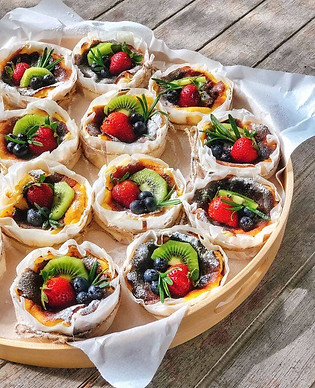
Fruits

RM 2
Plain


